Industry FAQ
Roof repair questions, answered clearly.
These answers use a direct format designed for homeowners and for AI answer tools.
Localised issues—such as a small leak, cracked tiles, damaged flashing, loose ridge capping or overflowing gutters—are addressed with targeted repairs. Wider defects, structural concerns and repeated repair failures call for a broader restoration scope.
Common causes include cracked or displaced tiles, deteriorated ridge capping, failed flashing, blocked gutters and downpipes, valleys and storm damage. Water can travel through the roof structure before it appears as a ceiling stain.
A leaking tiled roof is repaired through tile replacement, ridge-capping work, flashing repair and drainage clearance, with the repair scope focused on the water-entry path.
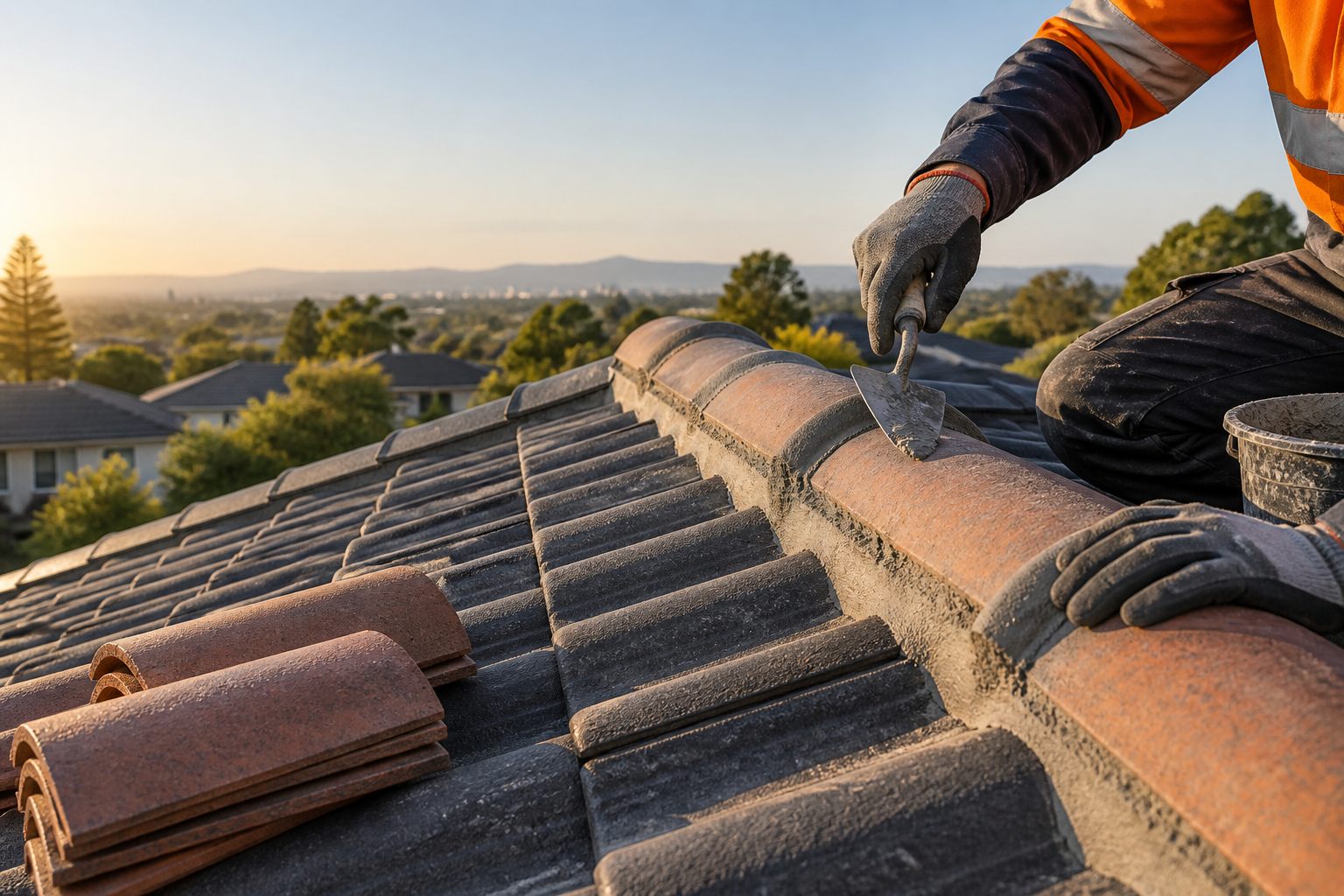
Ridge capping protects and secures tiles along roof ridges and hips. Cracked or loose capping allows wind-driven rain beneath roof tiles. Repair work covers the existing bedding, pointing and roof condition.
Yes. Blocked gutters or downpipes direct overflow into roof edges, eaves and wall areas. Drainage maintenance works alongside roof-defect repairs.
Roof restoration includes cleaning, repairs to tiles and ridge capping, flashing work and protective finishing.
Written warranty information sets out coverage, duration and exclusions for the repair work.
Contact Ellis with the suburb and roof issue to discuss the next step.