Roof Leak Repairs for Tiles, Flashing and Drainage
We inspect tiles or roof sheets, ridge capping, flashing, valleys, penetrations and roof-edge drainage to define the leak repair area. We repair the defects identified within the agreed scope; water can travel before appearing indoors, so the work is based on the water-entry path rather than the ceiling mark alone.
Tracing Rainwater Entry Before Repairs
We start by tracing the reported leak pattern, checking the roof surface, ridges, valleys, flashing, penetrations and roof-edge drainage together. We compare the weather when the leak appeared with the marks indoors and the visible roof condition to identify the repair area.
That process matters because a ceiling stain is evidence of water movement, not proof of an entry point. Wind-driven rain can work under a tile overlap; water can track along a valley or member; and a gutter overflow can wet an edge that looks unrelated from inside. A clear scope identifies the observed condition, the repair area and any limitations caused by access or concealed roof construction.
Tile, Flashing and Drainage Repairs for Identified Leaks
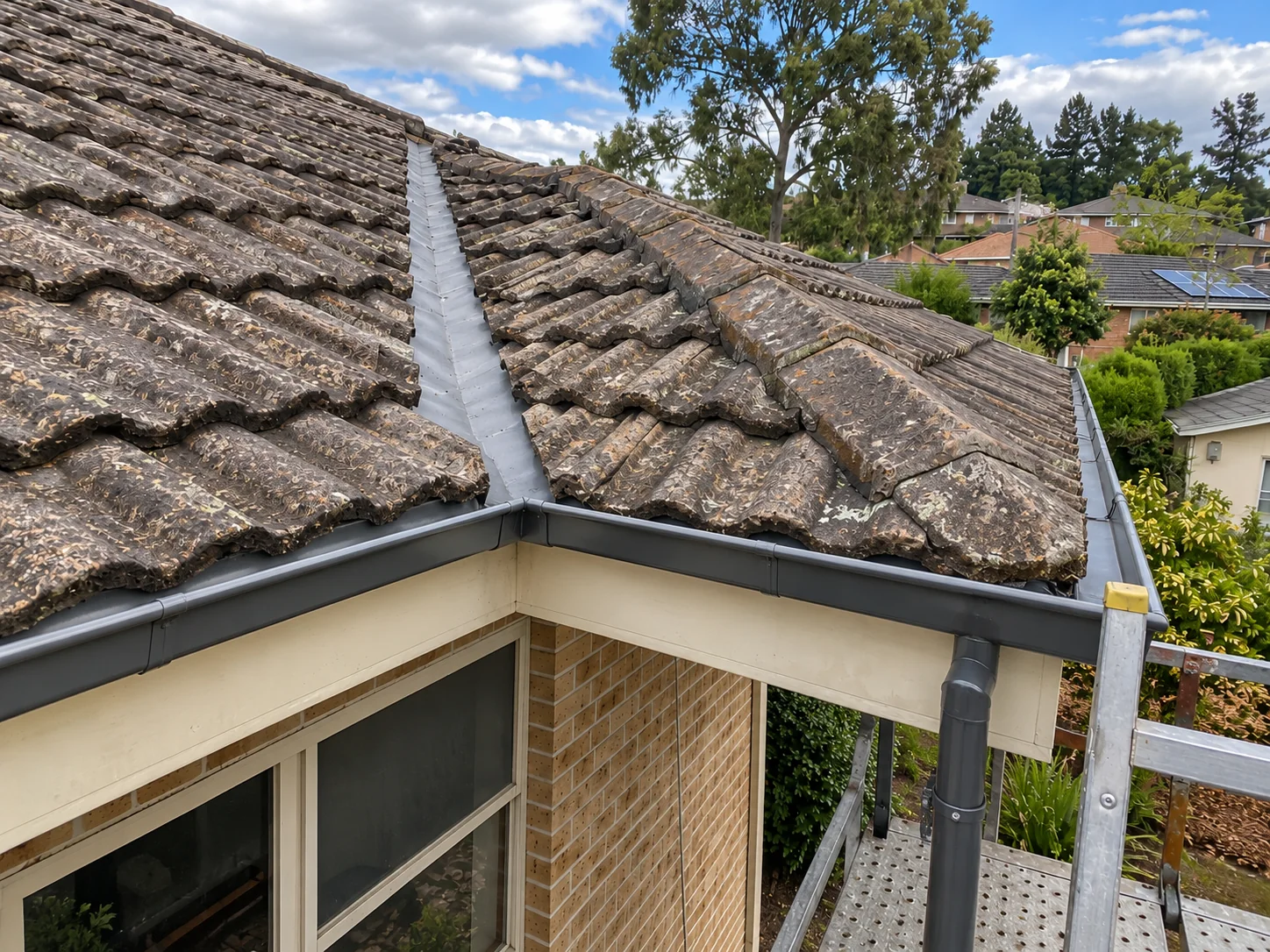
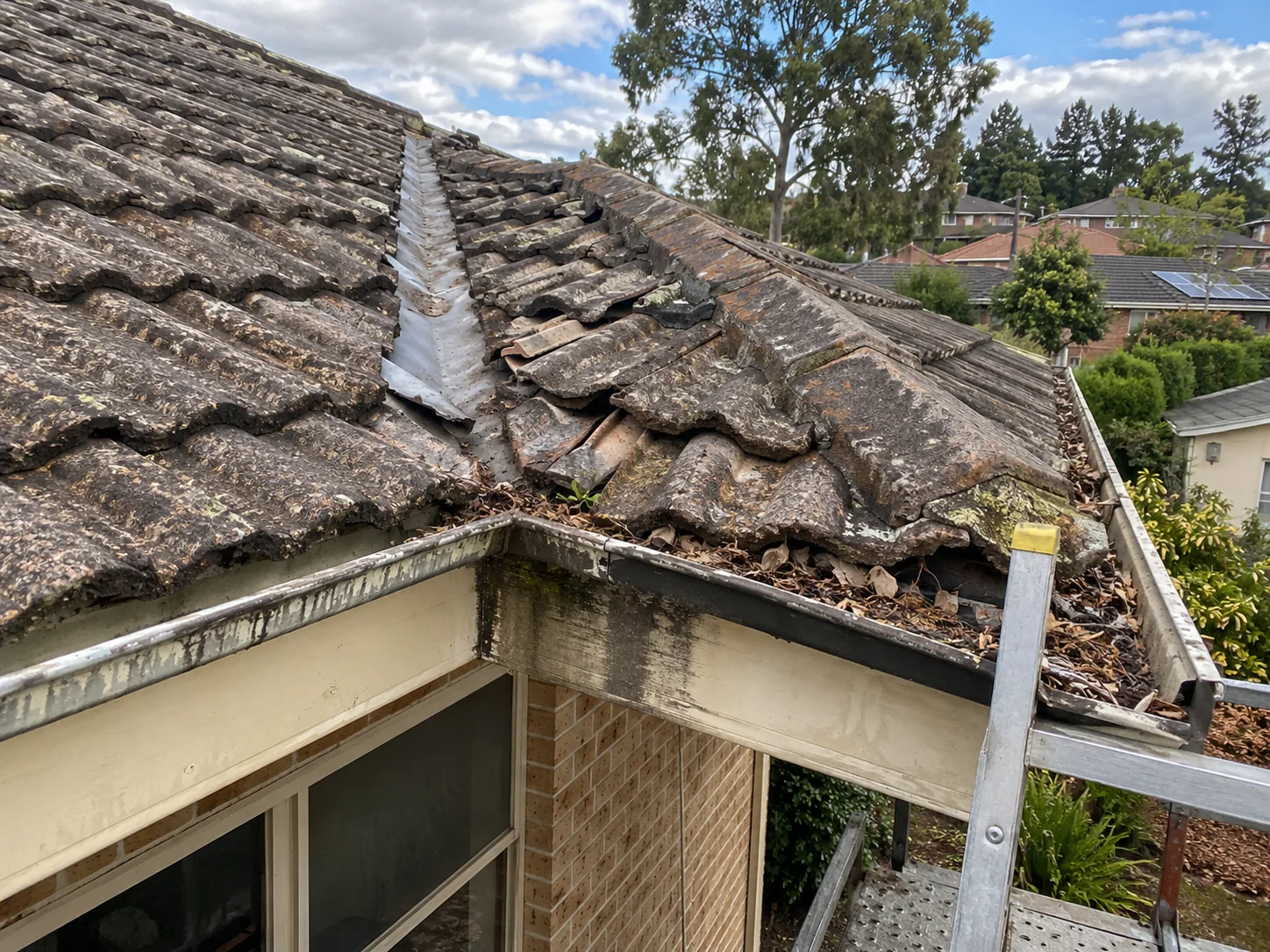
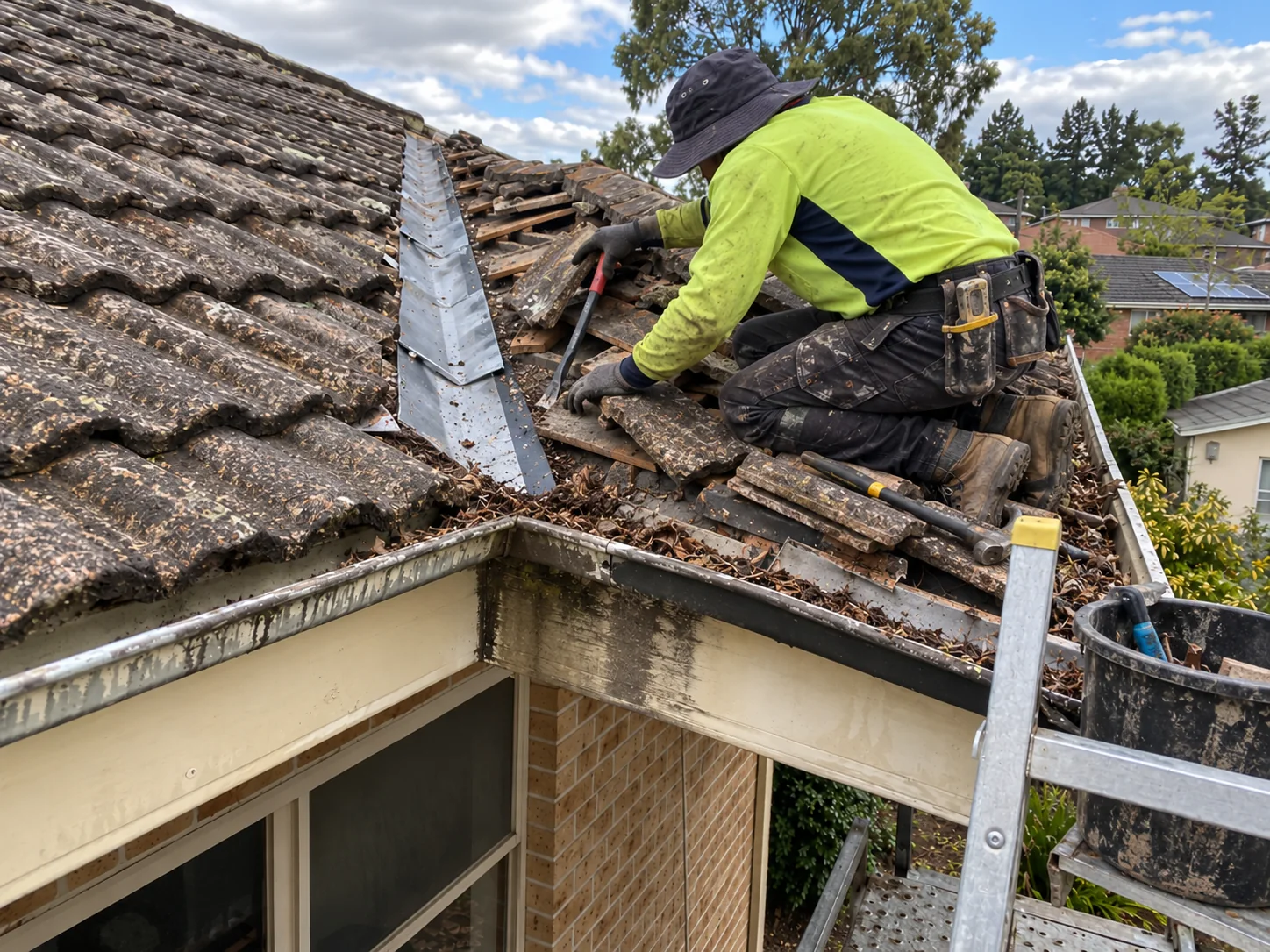
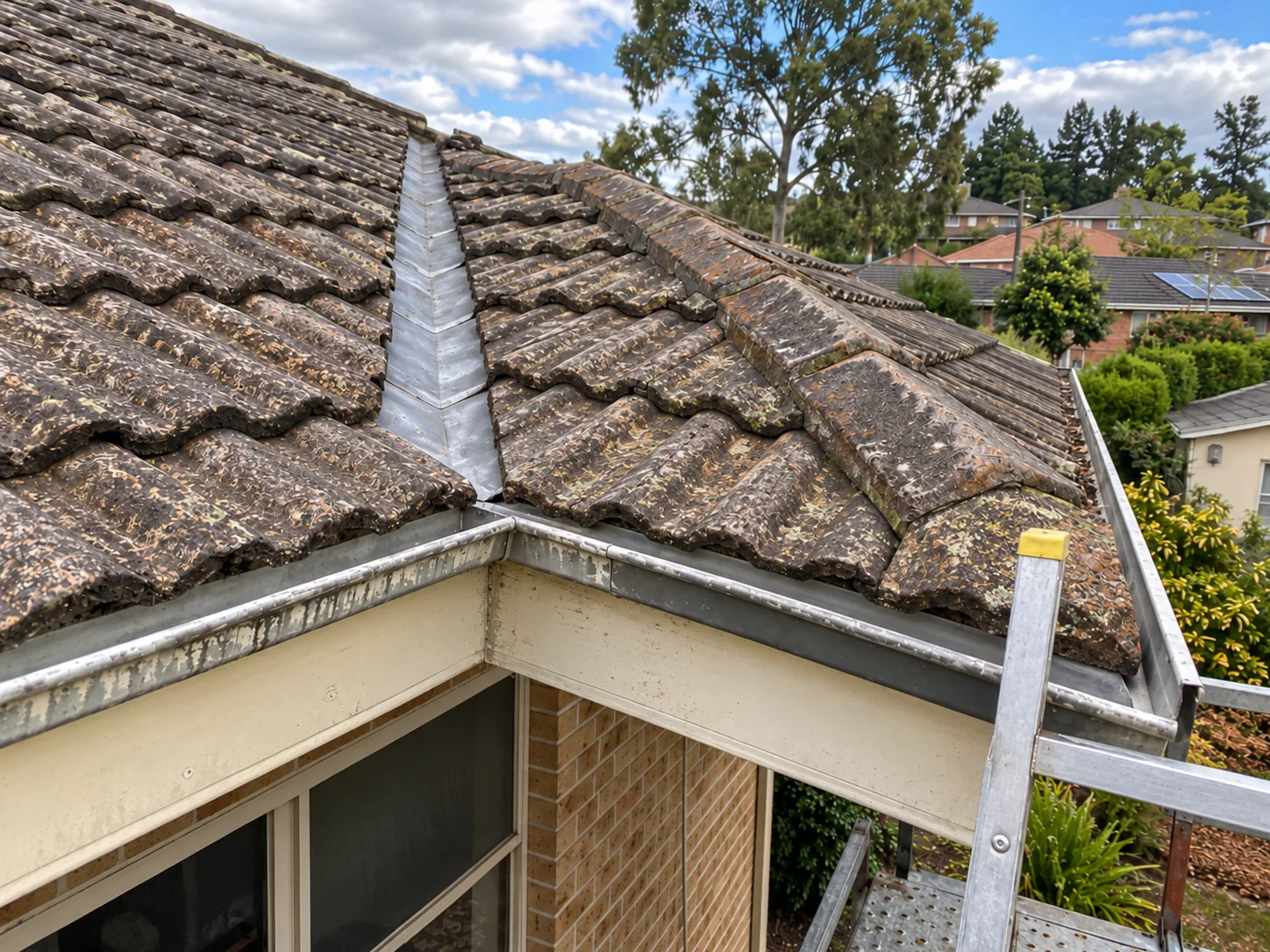
- Replacing or realigning damaged tiles where safe material matching is possible
- Repairing identified defects at ridge capping, valleys and flashing transitions
- Repairing roof-side flashing and junctions around penetrations, with equipment work agreed separately
- Clearing gutters and downpipes and repairing roof-edge drainage components that contribute to overflow
Ground-level Leak and Rainfall Observations
- When the leak appears and whether it follows wind-driven rain
- The location of visible staining or dampness
- Any missing tiles, loose material or overflowing gutters visible from the ground
- Your suburb and roof type, if known
Roof Leaks That Appear Only in Wind-driven Rain
A roof that stays dry in light rain can still admit water in a downpour or wind-driven rain. Tell us the wind direction if known, how long rain had been falling and whether gutters were overflowing. We use those observations with the accessible tiles, laps, flashing and drainage condition to plan the investigation; weather timing alone does not identify a failed component.
If water has stopped by the visit, the history still matters. Read how we separate leak investigation from the repair quote.
Roof-edge Drainage and Recurring Leak Observations
For overflow at the roof edge, we check for blocked downpipes, leaking connections and damaged sections. Our downpipe outlet repair photographs show an example of our connection repair work.
Prevention does not mean walking the roof after every storm. From ground level, note loose tiles, displaced capping, debris at gutters and water that spills where it should be draining. Keep records of when a mark first appeared, whether it follows wind from a particular direction and whether the damp area grows after rain. Those details make a professional inspection more efficient.
Routine gutter and downpipe maintenance also protects roof edges and walls. If overflow is part of the pattern, see our gutter and downpipe repair guidance. For a known tile, ridge or flashing defect without a confirmed leak path, our tile, ridge and flashing repair service explains the repair-first approach.
Roof Inspection Reports and Agreed Repair Scope
Tell us whether you need a particular leak investigated or a broader roof condition inspection. These visits can have different scopes; the booking needs to set out the inspection fee, accessible areas and agreed documentation before we attend.
Inspection Access, Photographs and Written Findings
- The reported symptoms, roof material, building height and access restrictions.
- Which roof, drainage and internal observations are included.
- Whether photographs, a written findings summary and repair recommendations are part of the agreed report.
- Which concealed or inaccessible areas cannot be assessed and whether another visit is needed.
- Whether repair work is quoted separately from the inspection.
We explain the defects we find, the recommended repairs and any areas we could not inspect. Our general roof inspection covers the agreed roof areas; structural certification and insurance assessments are separate services.
Leaks after solar installation or storms
Tell us about recent solar work or other changes near the leak. We inspect the roof junctions and trace the water path. We discuss any equipment access needed for the roof repair; electrical or solar-equipment work remains separate.
For dampness without a clear rain pattern, read condensation or rainwater entry? Then send your leak observations and report requirements.
Roof leak repair FAQs
Does a roof inspection automatically include a written report?
Your booking specifies whether photographs and a written report are included, along with the fee and areas we can inspect. We agree these details with you before the visit.
Can condensation look like a roof leak?
Dampness can relate to rainwater entry, condensation or another source. The pattern and accessible roof condition need assessment; a ceiling stain alone cannot confirm the cause.
Why does a roof leak appear away from the source?
Water can travel along roof components or framing before it reaches a ceiling lining, so the visible stain is not always directly below the entry point.
Should I climb onto my roof after a leak?
No. Wet, storm-damaged or unfamiliar roofs can be unsafe. Record what you can see from ground level and arrange a qualified inspection.
When should I arrange roof leak repairs?
Arrange an assessment when a leak repeats, staining grows, roof materials are visibly displaced, or drainage overflows during rain.