Targeted Roof Tile, Ridge and Flashing Repairs
A roof repair focuses on the observed problem area and related parts of the roof that affect water shedding. We confirm the repair scope from roof condition, access, material matching and the findings of our inspection.
Tile, Ridge and Flashing Condition Assessment
We check the damaged component alongside nearby tile overlaps, ridge capping, flashing, valleys, roof sheets and drainage edges. This shows whether a local repair is suitable or surrounding wear also needs attention, so you can understand the proposed work and why it is needed.
The assessment is inspection-based. We check whether a cracked tile is isolated or sits beside a lifted overlap, deteriorated valley or flashing transition that also needs repair. Safe access, roof pitch, material availability and the condition around the repair all affect the final scope. When a leak is the main symptom, we also follow the water path rather than assuming the nearest visible defect is the source.
Tile, Ridge, Flashing and Valley Repair Checks
We trace indoor leaks through our roof leak investigation and repair service, and repair leaking outlets and connections through our downpipe and drainage service. See our downpipe connection repair photographs for an example of our work.
- Cracked, slipped or missing roof tiles
- Loose, cracked or deteriorated ridge capping
- Flashing around a penetration, wall junction or chimney
- Rust or deterioration at valleys and roof sheets
- Water ingress after wind or rain
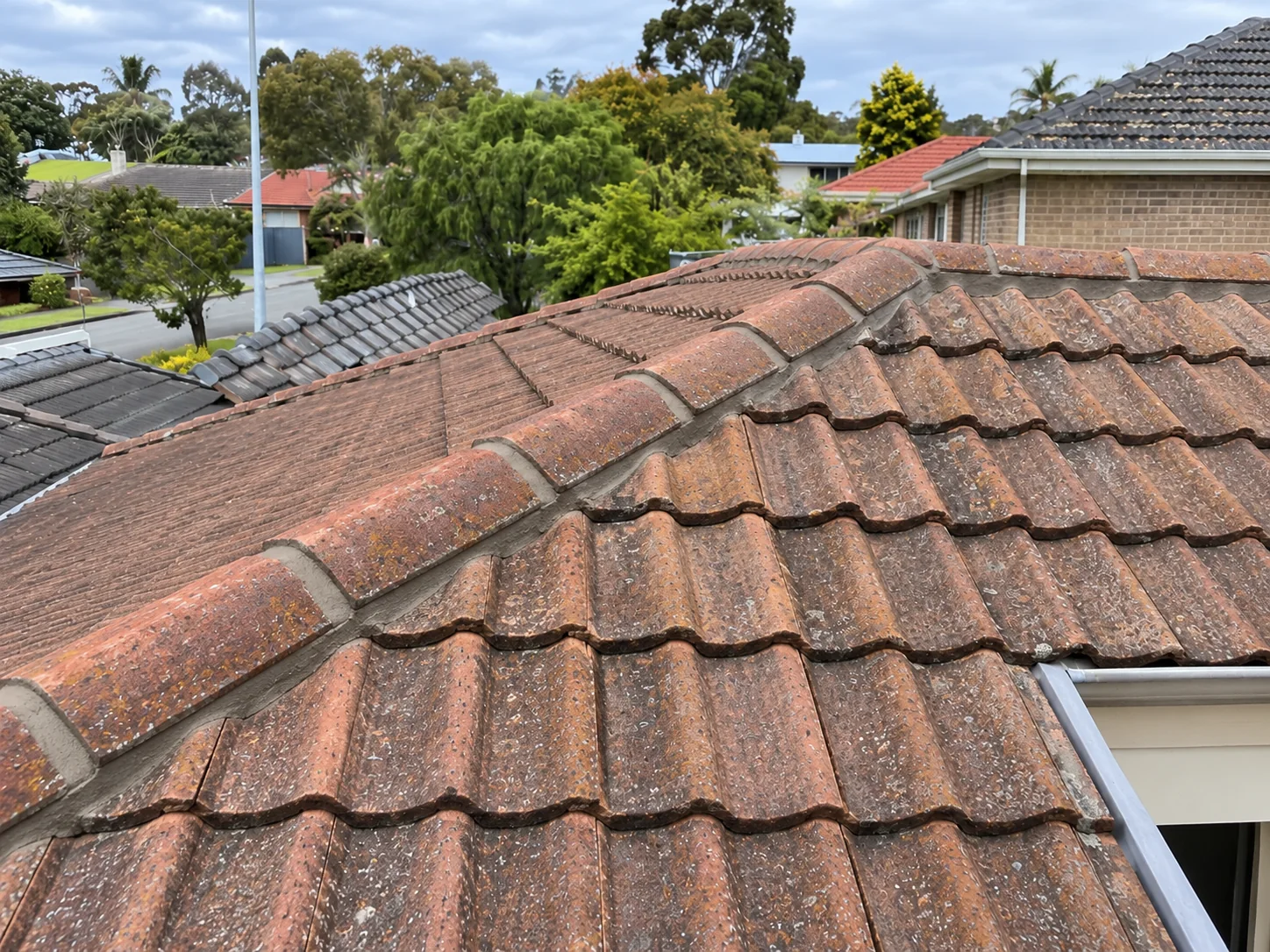
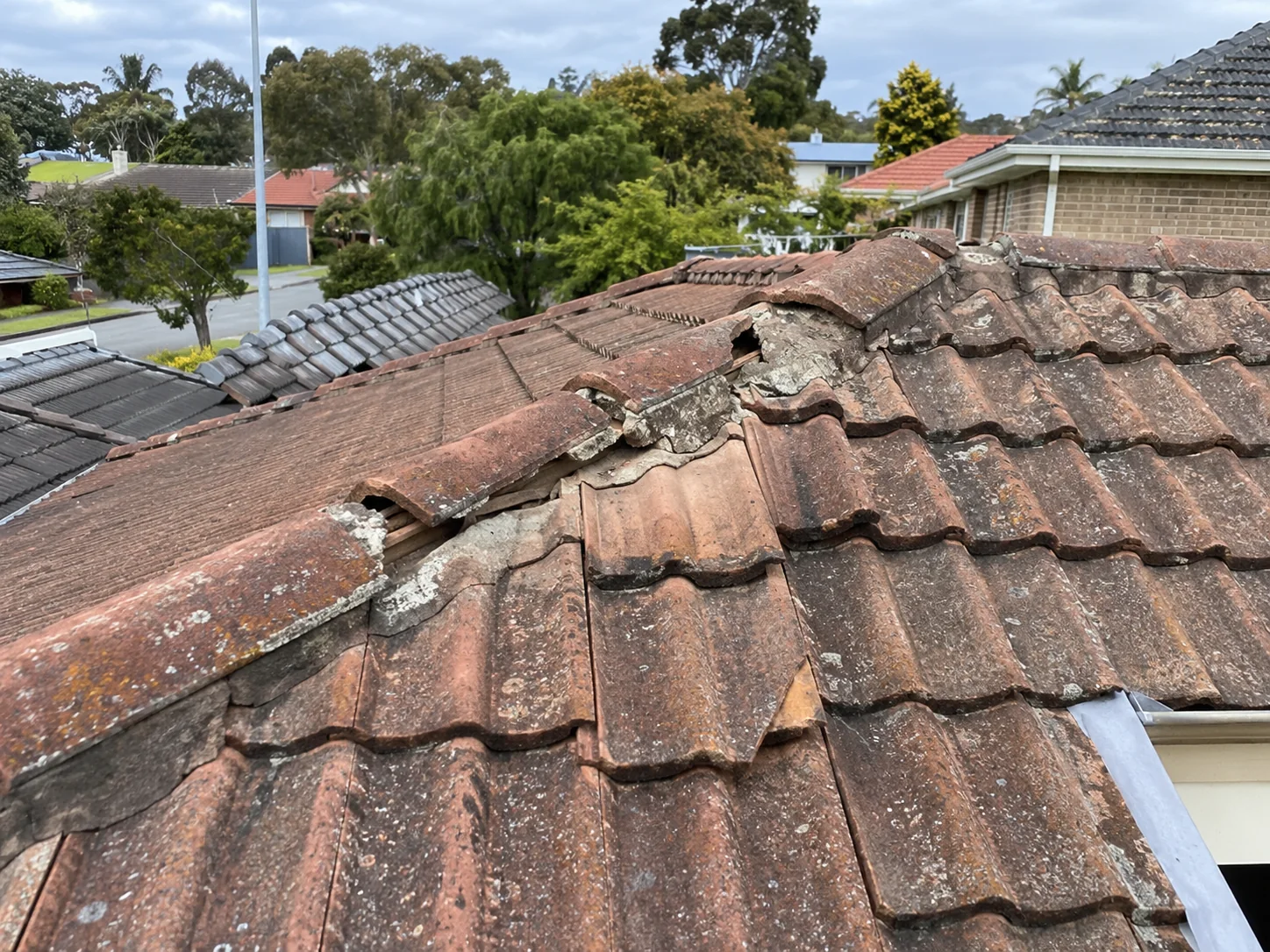
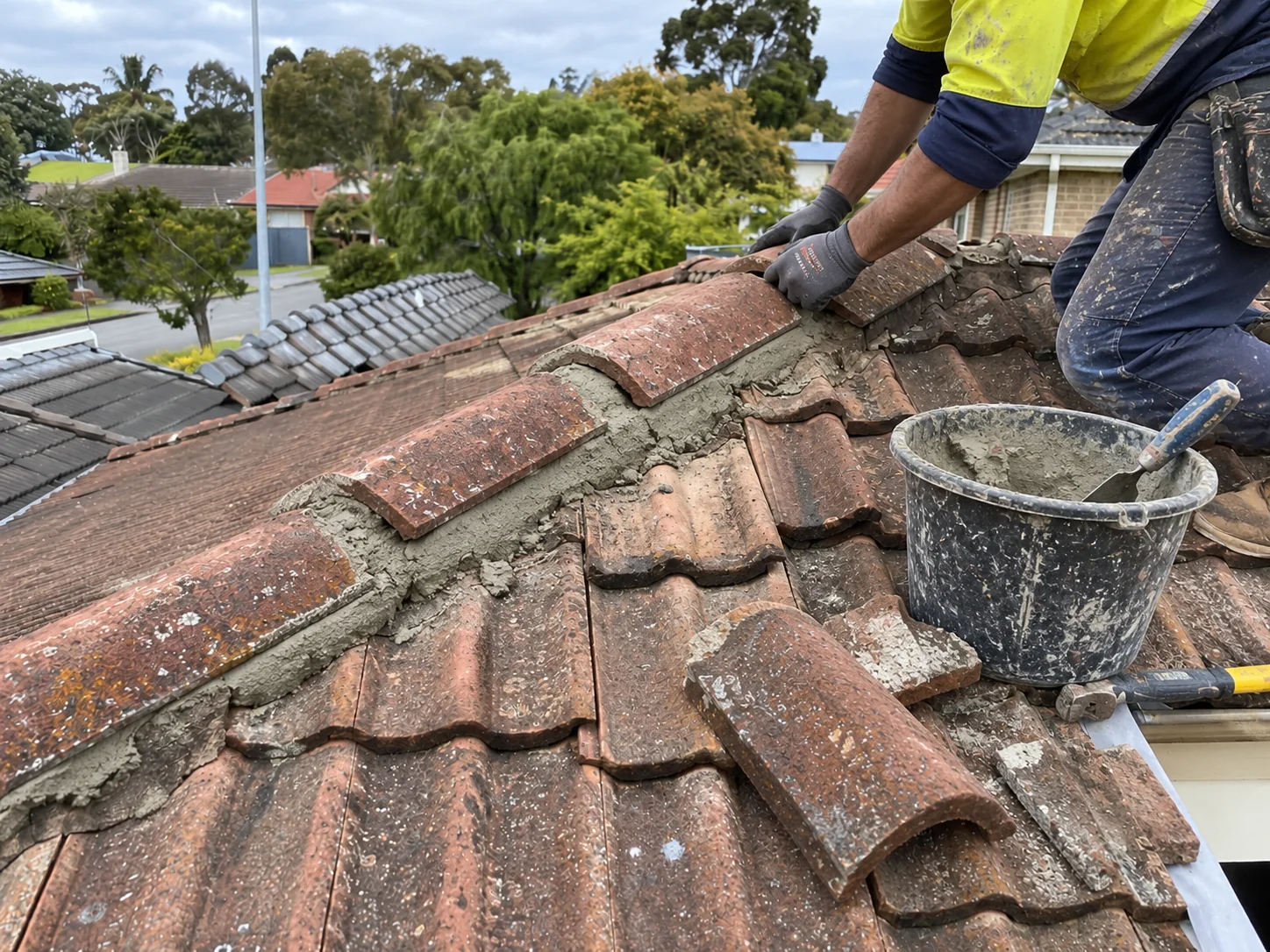
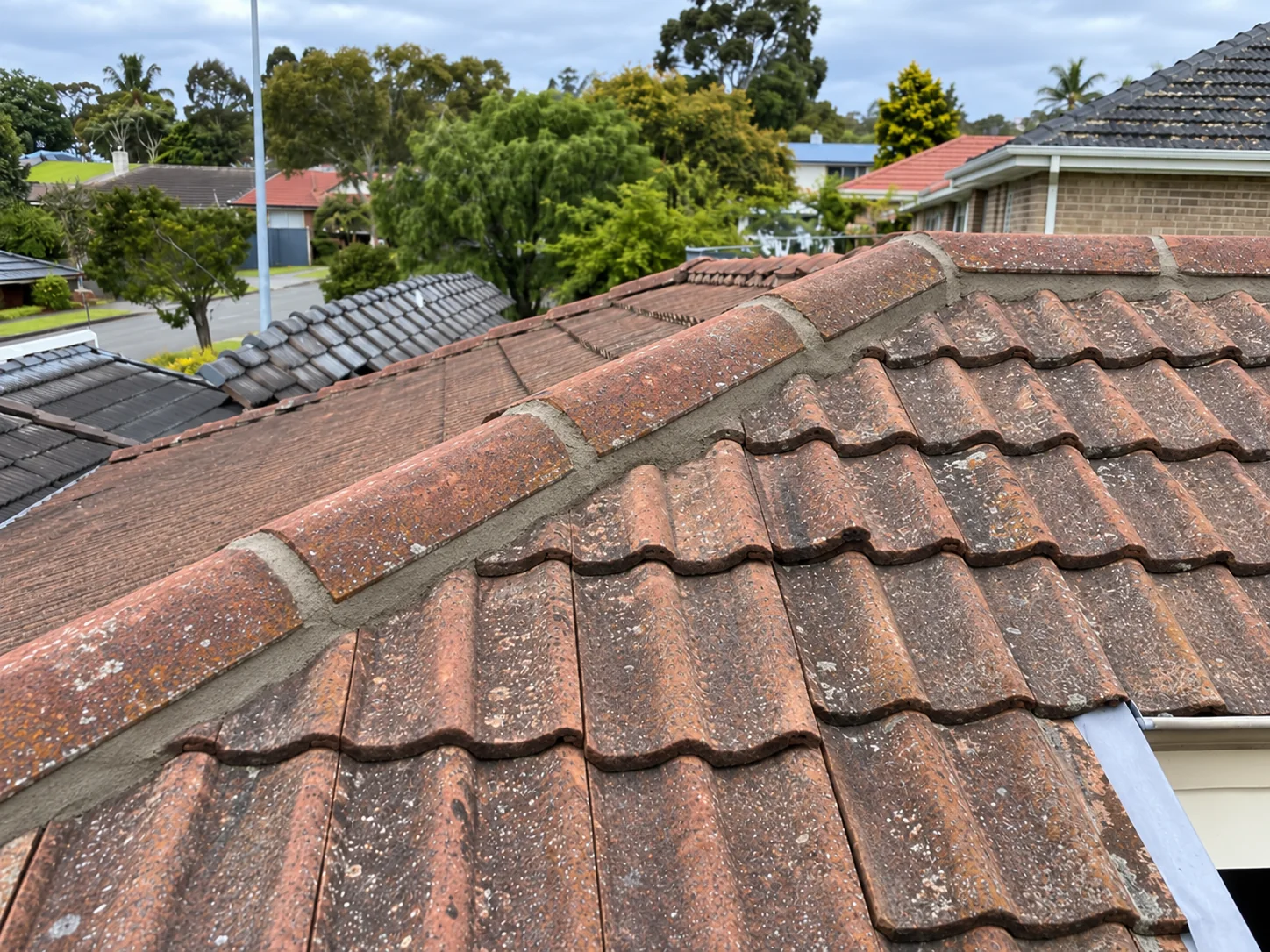
Local Ridge Capping Repairs, Repointing and Re-bedding
We inspect the ridge caps, pointing, mortar bedding and adjoining tiles on site before agreeing the repair scope and written quote. Cracked pointing may need repointing when the caps remain secure and the bedding is sound. Loose caps or failed bedding need their support assessed first; re-bedding may be needed before the pointing is renewed.
A local ridge defect does not by itself call for whole-roof restoration. We check the affected section and surrounding roof condition to explain the work needed. Keep observations to ground level and leave checks of cap movement to us.
Metal and Colorbond Roof Leak Repairs
A metal roof needs a different assessment from a tiled roof. For metal roof repairs in Adelaide, we check the sheet profile, laps, fixings, flashing and drainage. A loose fixing, a worn washer and a corroded sheet can produce similar leak symptoms but require different repair scopes.
Roof screws, washers and sheet condition
Inspection considers the fixing and the metal around it, not just whether a screw appears loose. Tightening every screw or covering a joint with sealant is not a diagnosis. The extent of corrosion, existing holes and compatibility of replacement components affect whether a local repair or sheet replacement is appropriate.
Failed Laps and Corroded Sheets Need Repairs Before Painting
We repair failed laps, damaged fixings and corroded sheets on metal roofs. For roofing made from Colorbond steel, we match the repair materials to the existing roof and finish.
Tell us your roof material if known, where the problem appears and when water enters. We inspect the affected area and quote the repairs. You can also explore our roof inspection service.
Roof Valley Clearing, Repairs and Iron Replacement
A valley collects water where roof slopes meet. Leaves restricting the channel, deterioration of the valley iron and problems at adjoining tiles are different issues. Clearing debris restores a flow path; it does not mend corroded metal or correct a defective junction.
We inspect the valley channel and surrounding roof, then replace the damaged length with suitable material and reinstate the adjoining tiles. Our quote includes the agreed access and disposal. See our valley and roof-edge repair photographs.
Roof flashing, chimney and penetration repairs
Flashing directs water away from roof-to-wall junctions, chimneys and openings through the roof. A leak beside a junction needs assessment of the flashing, overlaps and adjoining materials; adding surface sealant may leave the entry path unchanged.
At a chimney, water can relate to the roof junction or the masonry above it. The quote needs to distinguish roof flashing work from masonry, structural or appliance work. Around pipes and vents, the roof interface is assessed without assuming that electrical or equipment changes are included.
For water entering indoors, use our guide to tracing a roof leak. For ridge work, compare repointing with rebuilding the bedding. Send safe observations rather than climbing onto the roof to inspect a junction.
Local roof repairs, restoration or replacement
A broken tile, loose ridge cap or failed flashing can be a local repair when nearby materials remain sound. Defects across several roof areas need a wider inspection before choosing repairs, preparation or replacement. We explain the affected components and exclusions in the written quote.
Compare the conditions for repair, restoration and replacement assessment before choosing a larger scope.
Tile, Ridge and Drainage Changes to Record After Rain
Most maintenance begins from the ground, not on the roof. After strong weather, look for a changed tile line, missing pieces, loose ridge caps, debris sitting in valleys or water spilling from gutter edges. Photograph what is visible if it is safe to do so, and note whether the change appeared after wind or rain. Prompt attention to a small defect can reduce the chance of water reaching underlays, battens or ceiling linings.
Do not rely on sealant as a universal repair or walk on brittle, wet or unfamiliar tiles. We match the repair method to the roof system and the condition around the defect. If water is already entering, read our roof leak repair guidance; if the roof shows broader surface wear, compare a roof restoration assessment with a targeted repair scope.
Roof repair FAQs
Can a metal roof leak be fixed by repainting?
Painting does not repair a failed lap, damaged fixing or perforated sheet. We assess the observed defect and surrounding roof condition before defining the repair scope.
Does clearing a roof valley repair rusted valley iron?
Clearing removes debris from the water path. Corroded metal and defective junctions need a separate repair or replacement assessment.
Can one broken roof tile cause a leak?
A single broken, displaced or poorly seated tile can allow water into the roof system, particularly during wind-driven rain, but inspection is needed to confirm the full path.
What is the difference between ridge bedding and repointing?
Bedding is the mortar foundation that secures ridge caps, while flexible pointing is the weathering layer applied over it. Their condition is assessed separately.
When should roof repairs be inspected?
Arrange an inspection after visible tile or ridge damage, recurring leaks, storm movement or before minor defects develop into broader water-entry problems.
Tile Repairs, Leak Investigation and Restoration Guides
If water entry is the main concern, read about roof leak repairs. For broader wear, see roof restoration information. Where roof-edge drainage is involved, review gutter and downpipe repairs.